Jen Kelleman

The short version

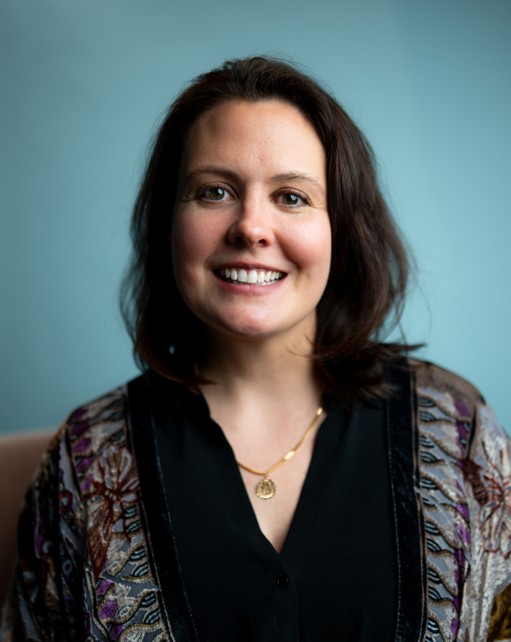
I’m a Principal Content Designer at Microsoft, where I own the content design for Fabric Data Engineering — Lakehouse, Materialized Views, Monitoring, and Osmos. I design the language layer of data infrastructure used by millions of people.

I also teach, speak, and write about what happens when you treat clarity as infrastructure.


The longer version

I’ve spent my career at the intersection of language and engineering systems — making complex things clear.

That started as content design: writing the words that help people use software. But the further I went, the more I realized the words aren’t downstream of the system — they are the system. A column name is a vocabulary decision. An error message is a decision framework. A glossary is a semantic model waiting to happen.

Today, I work at what I believe is the most important and least-named intersection in tech: the space between content design and data engineering. The documentation layer. The semantic layer. The place where what data means and what people think it means either align — or quietly diverge until something breaks.

At Microsoft, I design that alignment for real. I build terminology governance systems, naming conventions, content strategies for AI-assisted data products, and frameworks that help teams ship with clarity instead of chasing it after the fact.


What I believe

“The limits of my language mean the limits of my world.”

— Ludwig Wittgenstein, Tractatus Logico-Philosophicus (1922)

  • The documentation layer is infrastructure. If your docs are wrong, your data product is wrong.
  • Schema is language design. Every table name, column name, and relationship is a vocabulary decision.
  • Clarity isn’t polish — it’s discipline. The most important line of code in any data pipeline is the one that explains what it does.
  • AI systems fail at meaning before they fail at reasoning. Most hallucinations are semantic design bugs, not model problems.
  • The best systems teach, not just answer. Scaffolding beats output delivery.

What I’ve built

  • Terminology governance systems for Microsoft Fabric Data Engineering — canonical language for Lakehouse, Materialized Views, Monitoring, and Osmos
  • AI-First Design Review framework — a governance model making AI influence explicit in design reviews, pitched to leadership as a funded pilot
  • KB audit and restructure — 117 → 66 files, full quality governance model
  • Content + AI Operating Model — a 3-layer system (Explore → Iterate → Scale) turning content strategy into shared infrastructure
  • VibeHub — co-led a platform for democratizing UX engineering; 2,000+ projects in production, organic adoption across the design org
  • 5+ hackathon projects — Deaf-Led Sign Language Experiences (3 workstreams, executive award continuation), FlareIQ smart ring + AI Copilot, EduGrant Agent, and more
  • Full-Stack Clarity — a university course framework teaching the intersection of content design and data engineering

Frameworks I’ve created

  • Promptcraft — prompt engineering workshop delivered to ~50 designers
  • Stringweaver — LLM governance framework for voice consistency at scale
  • Content + AI Operating Model — Explore → Iterate → Scale system for turning content strategy into shared infrastructure
  • “AI or Me?” delegation framework — systematic AI task delegation, built in a 2-hour hackathon sprint
  • AI-First Design Review — governance model for surfacing AI influence in design specs
  • Clarity Delta — evaluation metric for measuring AI output quality through a content design lens

Awards & recognition

  • 3× Microsoft Global Hackathon executive awards — multi-year mentor and participant
  • Ability Executive Challenge winner — Deaf-Led Sign Language Experiences foundation project
  • VibeHub — called “one of the most gamechanging things at Microsoft recently” (Lucas Colusso, Azure Data design)
  • FlareIQ — internal recognition for smart ring + AI Copilot concept

Leadership & development

  • Leading the Future (LTF) — Microsoft’s Stage 3→4 leadership progression program
  • EZRA Executive Coaching — 1:1 coaching with Brian Dietzman (30-year military service, Certified Red Team Leader)
  • Azure Data Engineer Associate — certification in progress (target: June 2026)

Education

AI & Data

Tufts University MS, Computer Science
Carnegie Mellon University MS, Data Science
Microsoft Azure Data University Cloud Computing

UX

Emerson College MA, Writing and Publishing Digital Innovation
Deque University Designing an Accessible User Experience
Lafayette College BA, Psychology and English
Queen Mary University of London English Literature and Theatre

Beyond Microsoft

European Microsoft Fabric Community Conference — Stockholm 2024
  • Speaker — ODSC East, Microsoft × Red Bull Startup Innovation Labs, Microsoft Design Week, Boston University Data Science AI Hackathon, PyLadies Boston, Massachusetts AI Hub
  • Panelist — alongside leaders from AMD, WHOOP, Terawatt Energy, and Northeastern University
  • Mentor — Global Hackathon (3× executive awards), MA AI Hub, BU DS+X, Red Bull Basement
  • Educator — developing university curriculum at the content-data intersection
  • Writer — 9 published articles on Medium covering AI systems design, semantic layers, data architecture, and the role of content designers in building responsible AI

Let’s connect

I’m always interested in speaking opportunities, teaching partnerships, and conversations about the space between content and data.

Work with me → · Book me to speak → · LinkedIn


What others say

Read testimonials from colleagues, collaborators, and event organizers →